Budget Weddings
21 Small Wedding Ideas on a Budget That Still Look Beautiful
Where to simplify, what to prioritize and the small details that create atmosphere.
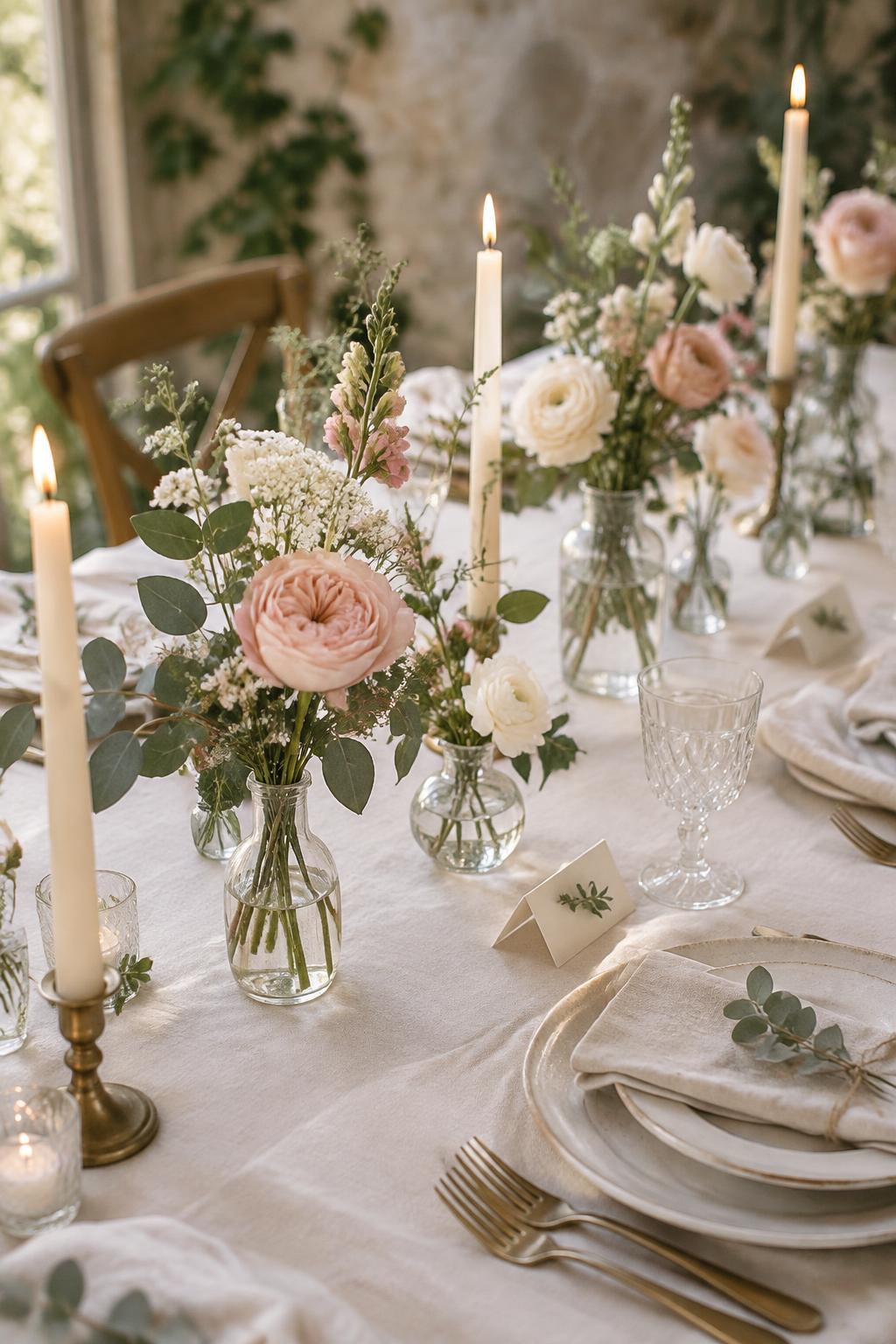
A smaller wedding gives you permission to be selective. Instead of stretching your budget across a large guest list and dozens of traditional wedding details, you can spend intentionally on the things that create atmosphere, comfort and memories.
The trick isn’t making everything as cheap as possible. It’s choosing fewer things—and choosing them well.
Here are 21 small wedding ideas that can help you create a beautiful, intimate celebration while keeping the budget under control.
1. Keep the guest list intentionally small
Your guest list influences far more than catering. More guests can mean more tables, chairs, invitations, drinks, transportation, favors and a larger venue.
Start with the people you genuinely want beside you rather than choosing a venue first and then feeling obligated to fill it.
A smaller guest list can also change the atmosphere. Instead of spending the evening trying to greet everyone, you may actually have time to sit, eat and talk with the people you’ve invited.
Decide what “small” means for you before looking at venues. Otherwise, it’s surprisingly easy for the guest list to grow around the space you’ve booked.
2. Choose a naturally beautiful venue
A space that already has character can reduce how much decorating you need.
Look for gardens, courtyards, restaurants, historic spaces, small inns or naturally attractive outdoor settings where the surroundings already provide much of the atmosphere.
Before comparing venue prices, consider what each space includes. A seemingly inexpensive blank venue may require additional furniture, lighting, linens and décor.
3. Have a backyard wedding
A backyard can create exactly the intimate feeling many couples want from a small wedding.
Long tables, simple flowers, warm lighting and a relaxed meal can transform a familiar outdoor space without trying to make it resemble a ballroom.
But don’t assume a backyard wedding is automatically inexpensive. Depending on the property, you may still need seating, tables, lighting, bathrooms, weather protection, catering equipment or other rentals.
The advantage is flexibility—not guaranteed savings.
Explore: 25 Small Backyard Wedding Ideas for an Intimate Celebration
4. Book a restaurant private room
For a small guest list, a restaurant can solve several problems at once.
Instead of separately arranging a venue, catering, tables, chairs, dishes and service staff, you may be able to host the celebration in a private dining room where much of that infrastructure already exists.
Choose somewhere with an atmosphere you already love and ask about minimum spend, service charges, time limits, cake policies and private-event options before booking.
5. Consider a weekday or off-peak date
If your schedule and guests allow it, ask venues and vendors whether pricing varies by day or season.
Don’t assume that every weekday or off-season date will be cheaper. Pricing varies considerably by business and location.
But flexibility gives you another variable to negotiate besides simply reducing what you buy.
6. Hold the ceremony and reception in one place
Using one location can simplify the day.
It may reduce transportation, décor duplication and the logistical work of moving guests between locations.
For an intimate wedding, the transition can be especially simple: ceremony in a garden or courtyard, drinks nearby, followed by dinner at the same property.
Less movement can also make the day feel calmer.
7. Choose one statement floral feature
You don’t necessarily need elaborate flowers everywhere.
Instead, choose one area where flowers will have the most visual impact: the ceremony backdrop, entrance, sweetheart table or dining table.
Then keep the remaining arrangements simple.
This gives the celebration a clear visual focal point without requiring large floral installations throughout the venue.
8. Use bud vases instead of large arrangements
Small arrangements can be particularly effective on intimate dinner tables.
A collection of bud vases with a few carefully chosen stems creates color and texture while allowing guests to see and talk to one another across the table.
They also work beautifully with candles and can be spread along a long table rather than concentrated in one large centerpiece.
9. Create atmosphere with candlelight
Lighting can change how an otherwise simple space feels.
Clusters of candles along dining tables, around the ceremony area or on safe surfaces throughout the reception can create warmth without filling the room with decorations.
Always follow your venue’s rules regarding open flames. Flameless alternatives may be required in some spaces.
10. Let beautiful linens do some of the decorating
Instead of buying numerous decorative objects, concentrate on the table itself.
A beautiful tablecloth or runner, cloth napkins and a restrained color palette can create a finished look before flowers or candles are added.
Think warm ivory, muted blush, soft sage and natural textures rather than lots of competing colors.
11. Use one long dinner table
If your guest count and venue allow it, one long table can instantly make a small wedding feel intentional.
Rather than trying to make a small gathering imitate a large reception, embrace the dinner-party atmosphere.
A long table also creates one strong visual feature for flowers, candles and place settings—and it photographs beautifully.
12. Serve a family-style meal
A shared meal fits naturally with an intimate celebration.
Family-style service can create a relaxed atmosphere where guests pass dishes and interact rather than experiencing the evening as a formal sequence of courses.
Whether it saves money depends entirely on the caterer and menu, so compare actual quotes rather than assuming one service style will be less expensive.
Choose the format because it fits the experience you want.
13. Consider brunch or lunch
A small wedding doesn’t have to follow the traditional late-afternoon ceremony and evening reception format.
A garden brunch, long lunch or afternoon celebration can feel distinctive and relaxed.
Think seasonal food, beautiful tables, cake, coffee and plenty of time for conversation.
Ask venues and caterers about their daytime options and minimums.
14. Keep the drinks menu simple
You don’t necessarily need an enormous bar selection.
Depending on your celebration and local rules, a thoughtfully selected wine-and-beer menu, a signature drink or a limited bar may suit a small wedding perfectly.
The important thing is to make the choice intentionally rather than paying for options your guests are unlikely to use.
Check your venue’s alcohol policies, licensing requirements and service rules before making plans.
15. Choose a small statement cake
A smaller guest list gives you the opportunity to choose a cake for the number of people you’re actually serving.
Instead of making size the focal point, consider simple decoration, fresh flowers where food-safe and appropriate, fruit, texture or elegant piping.
Another option is a small display cake accompanied by a different dessert—but compare costs first rather than assuming alternatives are automatically cheaper.
16. Use digital RSVPs
If printed reply cards aren’t important to you, digital RSVPs can simplify both stationery and guest management.
Your invitation can direct guests to a wedding website or RSVP form containing the information they need.
You can still use beautiful printed invitations if you love them while removing some of the extra paper pieces.
17. Simplify the stationery
Before ordering menus, programs, welcome signs, place cards, table numbers and multiple other printed pieces, ask which ones your wedding actually needs.
For a single-table dinner, for example, elaborate table-number signage doesn’t serve much purpose.
Keep the pieces that are useful or meaningful and skip the rest.
Simple typography on good paper can often look more considered than an abundance of matching signage.
18. Repurpose ceremony décor
Before ordering separate decorations for every part of the day, consider what can move.
Flowers from the ceremony may work near the reception entrance. Smaller arrangements might move to a dining or cake table. A welcome arrangement could be used elsewhere once guests are seated.
Discuss this with your florist or coordinator in advance so that anything being moved is practical and planned rather than becoming a wedding-day chore.
19. Skip favors that don’t add to the experience
Favors can be lovely when they’re meaningful, but they’re not mandatory.
If you’re considering them only because weddings are “supposed” to have favors, that money may be more useful elsewhere.
You could put it toward dessert, flowers, photography or leave it in the budget.
The same test works for many wedding purchases:
Would we still want this if nobody expected us to have it?
If the answer is no, it’s worth reconsidering.
20. Prioritize photography over disposable extras—if photographs matter to you
A useful budget exercise is separating things you’ll remember years later from things that exist primarily for the day.
For some couples, photography belongs high on that list.
For others, food, music or the venue may matter more.
The point isn’t that every couple should spend heavily on photography. It’s that your largest discretionary expenses should reflect what you expect to value after the wedding is over.
That often means reducing spending on small extras to protect the budget for one or two priorities.
21. Spend on the three things you care about most
This is the idea that ties everything together.
Before buying décor or comparing packages, choose three priorities.
They might be:
- Food + photography + flowers
- Venue + music + guest comfort
- Beautiful dinner + accommodation + honeymoon
Then give those priorities room in the budget and simplify elsewhere.
A small wedding doesn’t need to contain every traditional wedding element on a smaller scale.
It can be designed differently from the beginning.
Where to save and where to spend
There isn’t one correct wedding budget, but this framework can help you decide where your money will have the most impact.
| Consider simplifying | Consider prioritizing |
|---|---|
| Favors bought from obligation | Something guests will actually experience |
| Décor on every surface | One strong visual focal point |
| Excessive printed signage | Useful, beautiful stationery |
| Separate décor for every space | Pieces that can be reused |
| Trend-driven extras | Your three personal priorities |
| Paying for options nobody needs | Food, comfort or experiences you value |
These aren’t rules. A couple who loves stationery may happily spend more on invitations. Someone who grows flowers may make florals a major part of the day.
The goal isn’t to follow somebody else’s definition of a budget wedding.
It’s to stop paying for things that don’t improve your wedding.
Beautiful doesn’t have to mean more
Some of the most effective small-wedding ideas aren’t about finding a cheaper version of something.
They’re about realizing you don’t need it at all.
A smaller guest list, one beautiful table, a naturally attractive setting, thoughtful food and a handful of carefully chosen details can create far more atmosphere than filling a venue with things simply because they’re associated with weddings.
Choose what matters. Simplify what doesn’t.
And let the smaller scale be part of what makes the celebration special.
Planning your whole celebration?
How to Plan a Small Wedding on a Budget
About the editor
The Small Wedding Guide
The Small Wedding Guide shares practical, beautiful guidance for planning intimate weddings with thoughtful budgets.