Planning
How to Plan a Small Wedding on a Budget
A practical step-by-step guide to creating an intimate wedding that feels beautiful without paying for things that don’t matter to you.

Planning a smaller wedding gives you something particularly valuable: choice. With fewer guests, money that might otherwise disappear into additional tables, meals, invitations and rentals can be concentrated on the parts of the celebration that matter most.
But a small wedding is not automatically inexpensive. An intimate dinner at an expensive venue can still become costly quickly, while a thoughtfully planned celebration at home may cost considerably less. The goal is not simply to invite fewer people. It is to decide what kind of experience you want, then build your small wedding budget around it.
This guide turns that decision into a practical, step-by-step process. Use it to set the limits first, choose what deserves your attention and make an affordable small wedding feel intentional rather than reduced.
1. Decide what matters most
Before you assign money to categories, choose approximately three priorities for the day. These are the things you would notice if they were missing and remember long after the wedding is over. They might be beautiful photography, excellent food, a memorable location, flowers, live music, an intimate dinner, comfortable accommodation or an exceptional honeymoon.
There is no correct list. One couple may care deeply about gathering everyone around a remarkable meal and feel perfectly happy with digital invitations. Another may want photographs and flowers to take priority while keeping the reception simple. The important principle is that spending should follow your priorities rather than the conventional list of things a wedding is assumed to need.
Use those priorities as a filter whenever a new expense appears. Ask whether it supports the experience you are trying to create. If it does not, it may be a tradition you can adapt, reduce or leave out altogether.
Before buying anything, each partner should independently write down the three parts of the wedding they care about most. Compare the lists and build the budget around the overlap.
2. Set your total budget first
Choose the maximum total you are comfortable spending before you start shopping. Without that ceiling, it is easy to approve each choice in isolation and discover later that the combined cost is far beyond what you intended. Include any money offered by family only after the amount and timing are clear, and avoid building a plan around contributions that have not been confirmed.
Next, divide the total into broad categories. The table below is an illustrative framework, not an industry average or a recommendation for every wedding. Change it freely to reflect your priorities, local options and plans.
| Category | Example share |
|---|---|
| Venue + food + drinks | 40% |
| Photography | 15% |
| Clothing + beauty | 10% |
| Flowers + décor | 10% |
| Music/entertainment | 5% |
| Invitations + stationery | 5% |
| Cake/dessert | 5% |
| Contingency/other | 10% |
If food is central to the celebration, you might move money into the meal and away from stationery or entertainment. If photography is your highest priority, allocate for it before deciding how much remains for décor. A useful budget is not perfectly balanced; it is honest about what you value.
3. Build a genuinely small guest list
Guest count influences much more than catering. Every additional person may affect drinks, seating, tables, invitations, transportation, favors, rentals and the size of venue you need. Reducing the list can therefore change several expenses at once, making it one of the most effective decisions in small wedding planning.
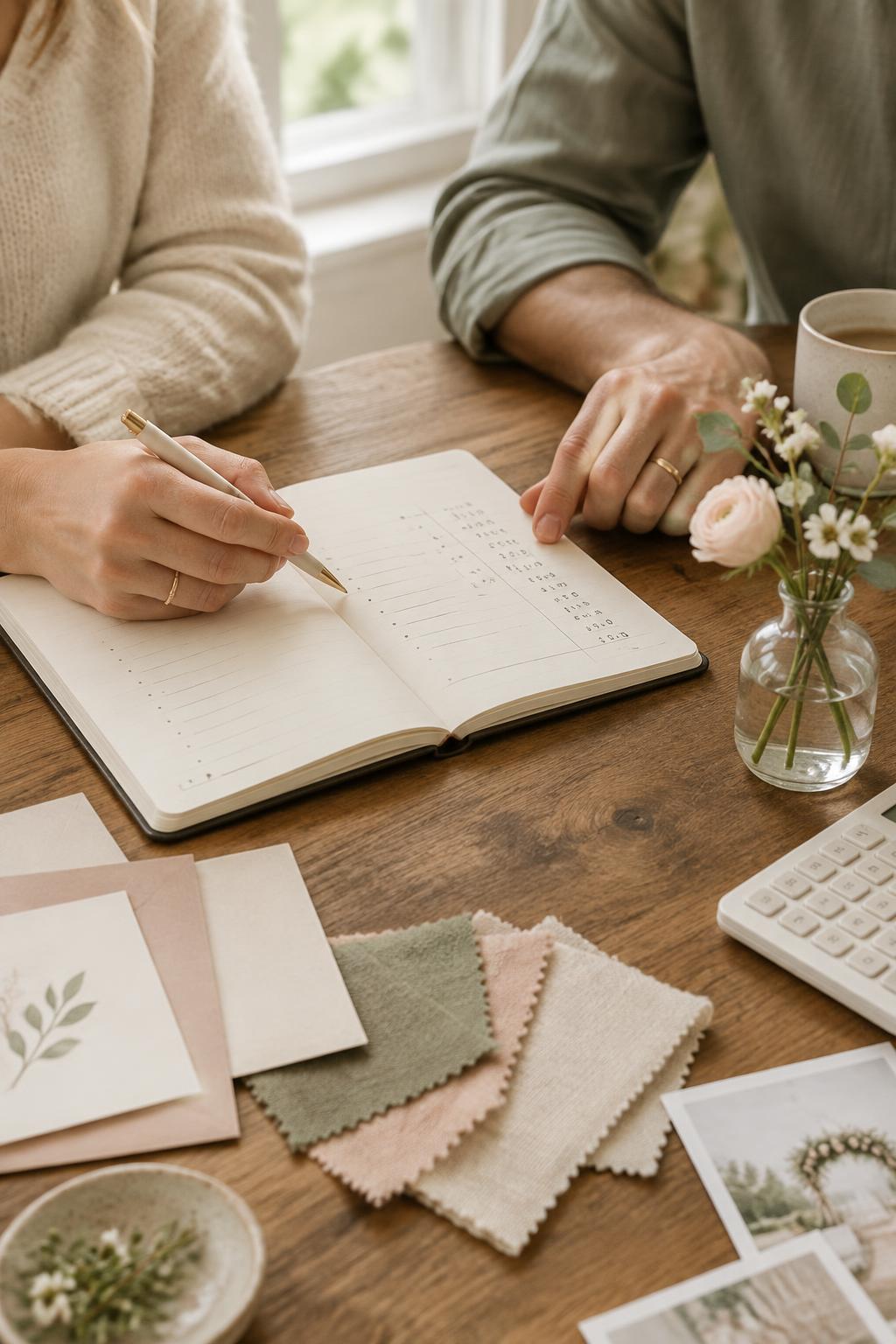
Begin by sorting names into three groups: Must be there, Would love to have and Obligation. Start with the first group and pause before adding the others. Consider who is actively part of your life, who you can imagine sharing a long meal with and whether both partners feel comfortable with the balance.
A smaller wedding works best when it is intentionally intimate, not when a conventional large wedding has simply been squeezed into a smaller room. You do not need to recreate every social circle at the reception. Clear, consistent boundaries—such as inviting immediate family and close friends only—are often easier to explain than individual exceptions.
4. Choose a venue that works with the budget
The venue shapes many other costs, so look beyond traditional large wedding spaces. A backyard or family property, restaurant private room, small inn, garden, community space, or a small ceremony venue followed by dinner at a restaurant can all suit an intimate wedding on a budget.
A vacation rental may look promising, but never assume that a standard booking permits a wedding or gathering. Before paying, confirm in writing that events are explicitly allowed. Check occupancy limits, insurance requirements, noise restrictions, parking, vendor access and local rules as well as the host’s event policy.
Consider what is included, not just the hire fee. Tables, chairs, bathrooms, kitchen access, shelter, heating or cooling and end-of-night cleanup can materially change the final cost. A naturally attractive room or garden may also need very little decoration, while a blank space can require rentals and styling to feel finished.
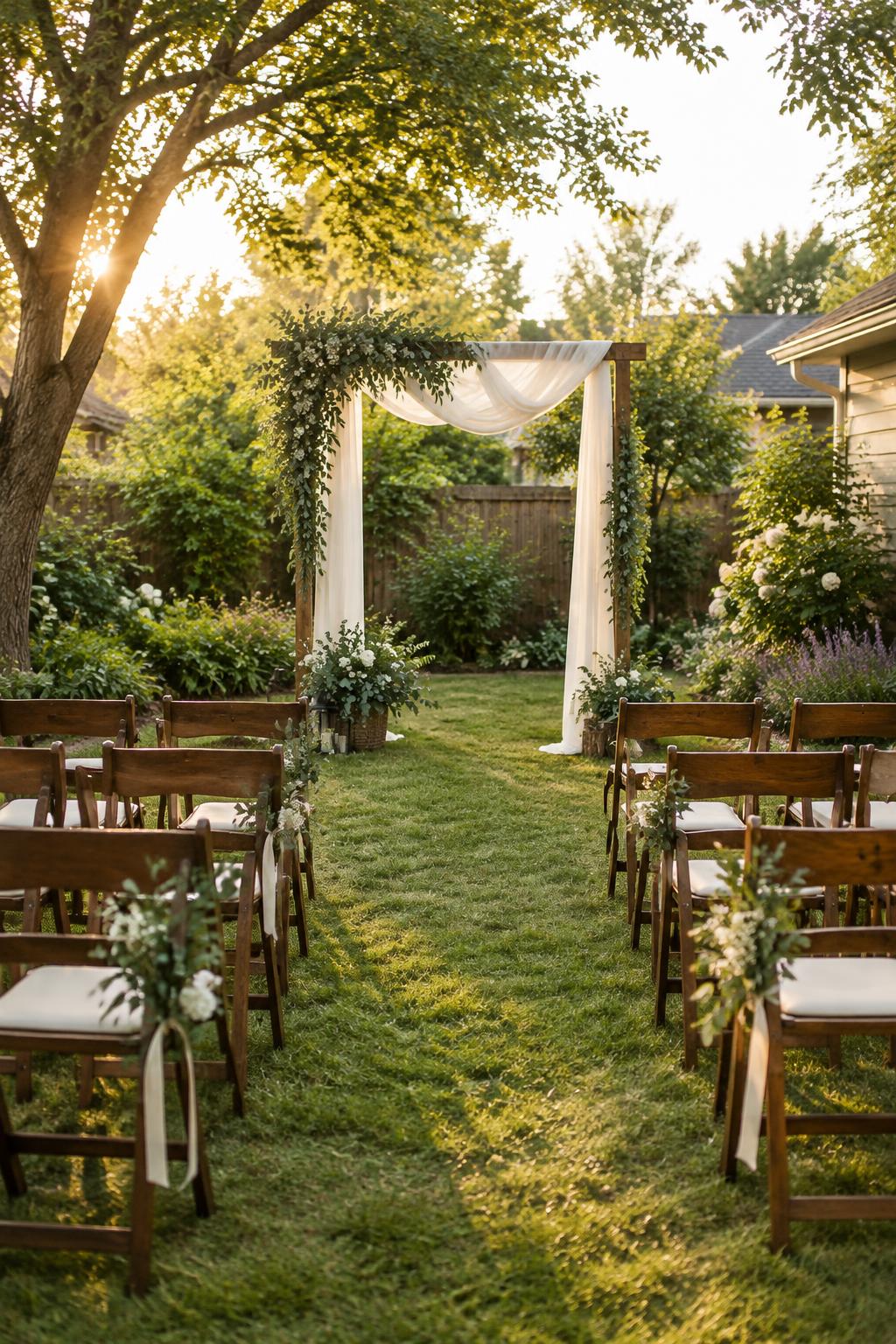
For a home celebration, see our small backyard wedding ideas. They include practical ways to make a familiar setting feel special without hiding what makes it personal.
5. Simplify food and drinks
A smaller guest list opens up formats that can feel more personal than a standard reception package. Consider a restaurant dinner, family-style meal, brunch, afternoon celebration, limited menu, cake-and-champagne reception or a dessert-focused gathering. Where appropriate, a carefully selected beer and wine menu can be simpler than a full bar.
Fewer guests can also make it possible to spend more per person while keeping the total manageable. That might mean better ingredients, attentive service or one memorable course rather than a longer menu. Ask for a complete quote that includes service, equipment, delivery, taxes and any venue fees so that options can be compared fairly.
Do not assume DIY food is automatically safer or cheaper. Storage, preparation time, serving equipment, cleanup, food handling, venue requirements and local rules all matter. If friends or relatives are expected to manage the meal, consider whether that responsibility prevents them from enjoying the celebration.
6. Spend strategically on décor
A small space rarely needs large quantities of decorations. Choose a few visual focal points: the ceremony backdrop, tablescape, entrance, flowers, lighting or a carefully placed sign. Concentrating your budget creates a clearer impression than spreading small purchases across every surface.
Where practical, move ceremony flowers to the reception, use bridesmaid bouquets on tables or place a welcome arrangement near the cake later in the day. Confirm who will move everything and when; a reuse plan only saves money if it does not create a stressful gap in the schedule.
Candles, greenery, considered linens and warm lighting can sometimes create more visual impact than many unrelated decorative objects. Check flame restrictions with the venue and use permitted alternatives when needed. A simple palette also helps inexpensive elements feel connected rather than improvised.
7. Choose where to save and where to spend
The right trade-offs depend on the two of you. The suggestions below are prompts, not rules.
| Consider saving on | Consider prioritizing |
|---|---|
| Large quantities of favors | Photography if memories matter highly |
| Excessive signage | Food guests will actually enjoy |
| Décor for every empty surface | Comfortable seating |
| Elaborate printed programs | A venue with natural atmosphere |
| Trend-driven extras | The couple’s top priorities |
The best small wedding budget is not necessarily the smallest one. It is the one where very little money is spent on things you do not value. A thoughtful splurge can make sense when it supports the heart of the day; a cheap purchase is still wasted money if it adds nothing meaningful.
For more ways to make thoughtful trade-offs, browse these small wedding ideas on a budget. The strongest ideas tend to simplify the day rather than imitate a larger celebration for less.
8. Create a simple wedding timeline
A compact plan keeps deposits, decisions and final confirmations from arriving at once. Use this example as a starting point and adjust it substantially for your location, vendor availability and the complexity of the celebration.
Some small weddings can be planned quickly; others require a longer lead time because of popular venues, travel or specialist vendors. Work backward from the elements you cannot easily move and keep the remaining decisions as simple as possible.
9. Keep a contingency fund
Leave part of the total budget unallocated instead of planning to the final amount. Around 5–10% can be a useful illustrative range, but it is not a mandatory rule. Choose a cushion that reflects the uncertainty in your plans.
Unexpected expenses might include delivery, alterations, taxes, gratuities where applicable, weather backup, extra rentals, transportation or last-minute replacements. A contingency fund allows you to solve those problems without taking money away from a priority or increasing the total spend.
If the money is still untouched near the wedding, resist the urge to spend it simply because it is available. Keeping it—or using it for a considered experience after the day—is also a successful budget outcome.
Save for later
10. Final small-wedding budget checklist
- □ Set maximum total budget
- □ Choose three priorities
- □ Draft guest list
- □ Select venue
- □ Compare food options
- □ Book priority vendors
- □ Set décor budget
- □ Plan invitations
- □ Create timeline
- □ Keep contingency money
- □ Confirm final guest count
- □ Confirm vendor payments and logistics
A smaller wedding can give you more room for what matters
A smaller celebration is not simply a reduced version of a traditional large wedding. It can be designed differently from the beginning. A shorter guest list can create room for longer conversations, better food, meaningful details and more intentional spending.
When a choice appears, ask whether you will remember it or merely feel expected to purchase it. That question can protect both the budget and the atmosphere of the day. The result does not need to look expensive to feel generous; it needs to feel recognizably yours.
If you are ready to gather inspiration, explore our favorite small wedding ideas for an intimate celebration.
Frequently asked questions
Is a small wedding always cheaper?
No. Guest count can reduce several variable expenses, but venue choice, food, travel, clothing, photography and other priorities can still make a small wedding expensive. A smaller guest list simply gives couples more control over where the budget goes.
How many guests count as a small wedding?
There is no universal definition. Choose a guest count that creates the atmosphere and budget you want rather than trying to meet an arbitrary number.
What is the easiest way to reduce a wedding budget?
Reducing guest count can affect several costs simultaneously, but review your largest expenses first. Venue, catering and other major categories usually matter more than saving tiny amounts on individual decorations.
Can you have an elegant wedding on a small budget?
Yes. Focus on a cohesive setting, a few strong visual details and the guest experience rather than trying to reproduce every element of a large traditional wedding.
About the editor
The Small Wedding Guide
The Small Wedding Guide shares practical, beautiful guidance for planning intimate weddings with thoughtful budgets.