Décor & Style
Small Wedding Centerpiece Ideas on a Budget
Beautiful centerpiece ideas using seasonal flowers, candlelight, greenery and simple vessels with thoughtful impact.
Centerpieces are one of the easiest places to overspend on a small wedding, largely because pricing is usually set per table—and a small wedding has fewer tables to spread that cost across. The upside is that fewer tables also means you can spend more thought, if not more money, on each one.
Here's how to build centerpieces that feel considered without depending on a large florist order.
Start with the shape of the table, not the flowers
A long table generally needs a different centerpiece approach than round tables—several small clusters rather than one large arrangement per table. Decide on your table layout before pricing flowers, since it changes how much material you actually need.
Choose in-season, local flowers
Flowers that are in season in your region and time of year are typically more available and easier for a florist to source without importing, which can affect price and freshness. Ask your florist directly which flowers are in season for your date.
Ask your florist for a quote broken down by stem type and quantity, not just a flat centerpiece price. It makes it much easier to see where substituting one flower for a less expensive one actually saves money.
1. Bud vase clusters
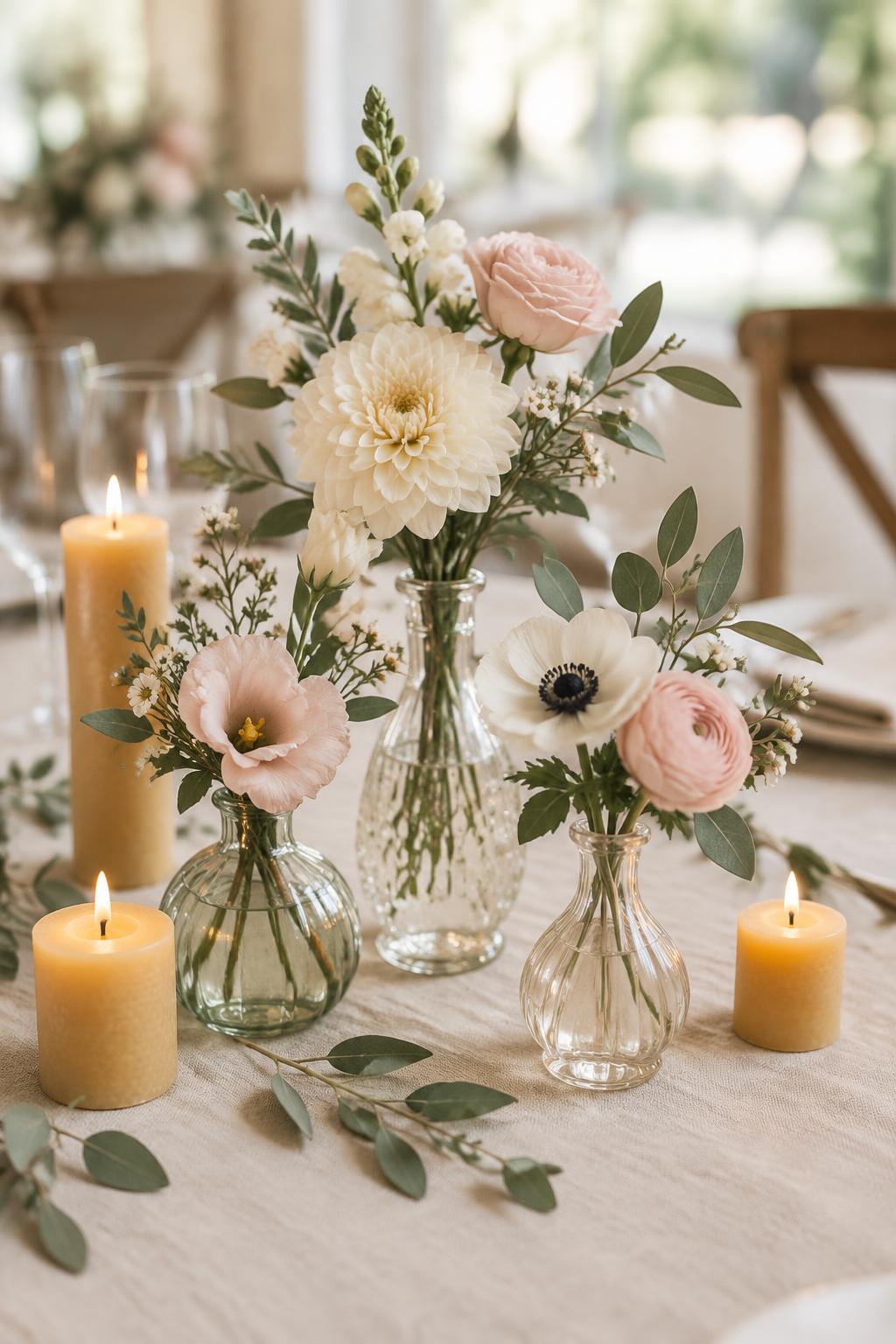
Several small glass vases, each with one or two stems, spread along the table. This approach uses fewer total stems than one large arrangement while still covering visual space.
2. A single statement bloom per vase
One large, well-chosen flower—a peony, dahlia or garden rose—in a simple vase can carry a table on its own when paired with candles.
3. Greenery-forward arrangements with minimal flowers
Eucalyptus, olive branches or ferns typically cost less per stem than flowers and can fill significant visual space, with a few flowers added as accents.
4. Foraged or garden-cut arrangements
If you or a family member has a garden, cuttings can supplement or replace purchased flowers—check timing carefully so they're fresh for the day.
5. Loose, unstructured arrangements over formal designs
A relaxed, gathered look often requires less labor-intensive florist work than a tightly structured arrangement, which can affect the price.
6. Candle-only centerpieces
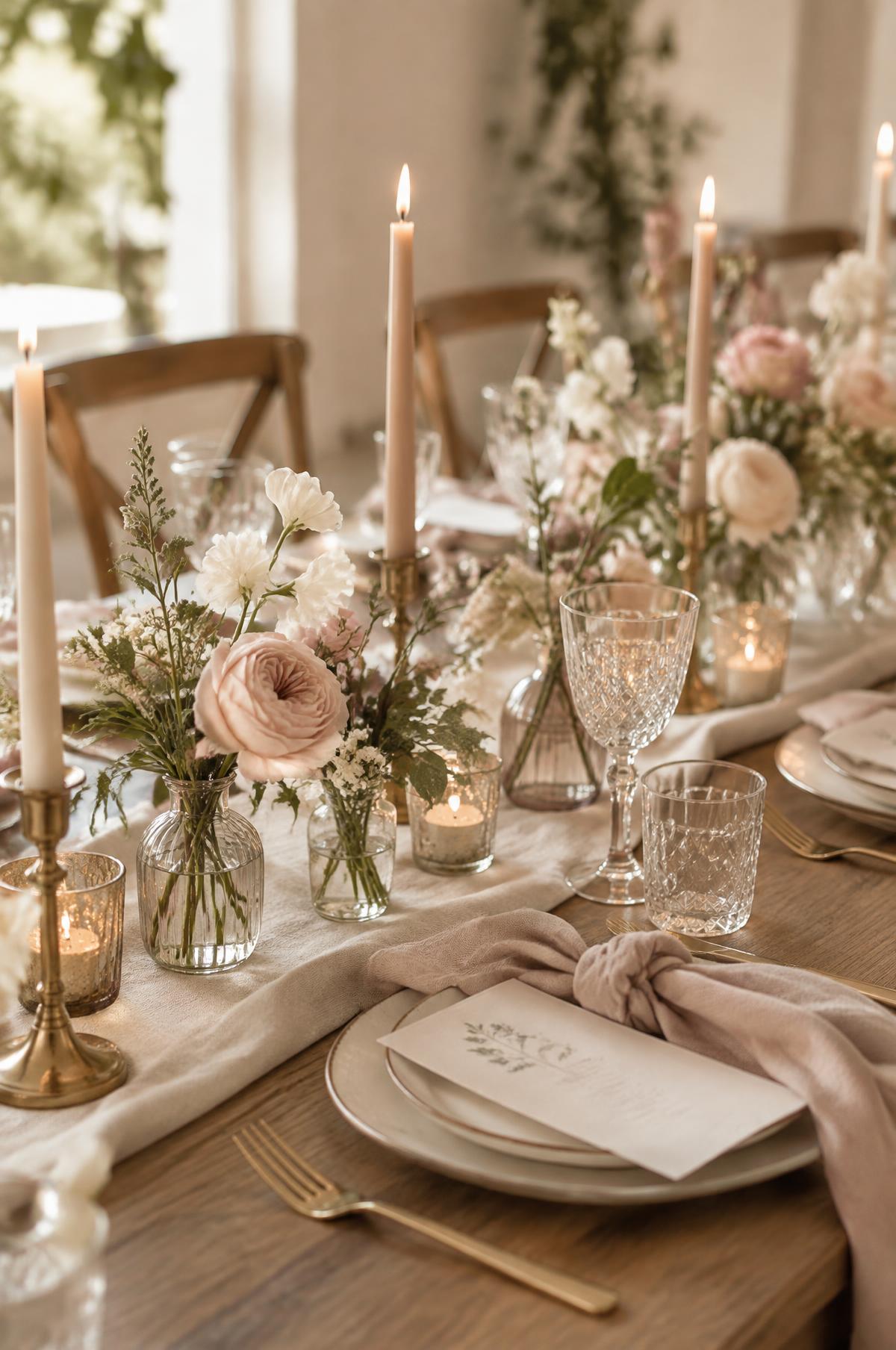
A cluster of taper and pillar candles at varying heights can serve as a full centerpiece with no flowers at all, especially for an evening reception.
7. Fruit or produce-based centerpieces
Citrus, pears or seasonal produce arranged with greenery can create a full, textured centerpiece for less than an all-floral design.
8. Books, candles and small personal objects
A stack of meaningful books topped with a small vase or candle can add height and personality without any flowers.
9. Potted plants or herbs guests can take home
A small potted plant per table setting or center can double as a favor, reducing the need for separate centerpiece and favor budgets.
10. Dried and preserved flowers
Dried flowers can be purchased or arranged well ahead of the wedding, removing time pressure, and can often be kept afterward as a keepsake.
Move ceremony flowers to reception tables
Arrangements used for the ceremony arch, aisle or altar can often be relocated to centerpiece duty during cocktail hour. Confirm ahead of time who is responsible for moving them and when, since this only saves money if it doesn't disrupt the schedule.
Ask what happens to the flowers afterward
Discuss with your florist or a friend whether centerpieces will be donated, given to guests, or composted. Deciding this ahead of time avoids waste and can turn a decoration into a small parting gift.
A smaller table can still feel generous
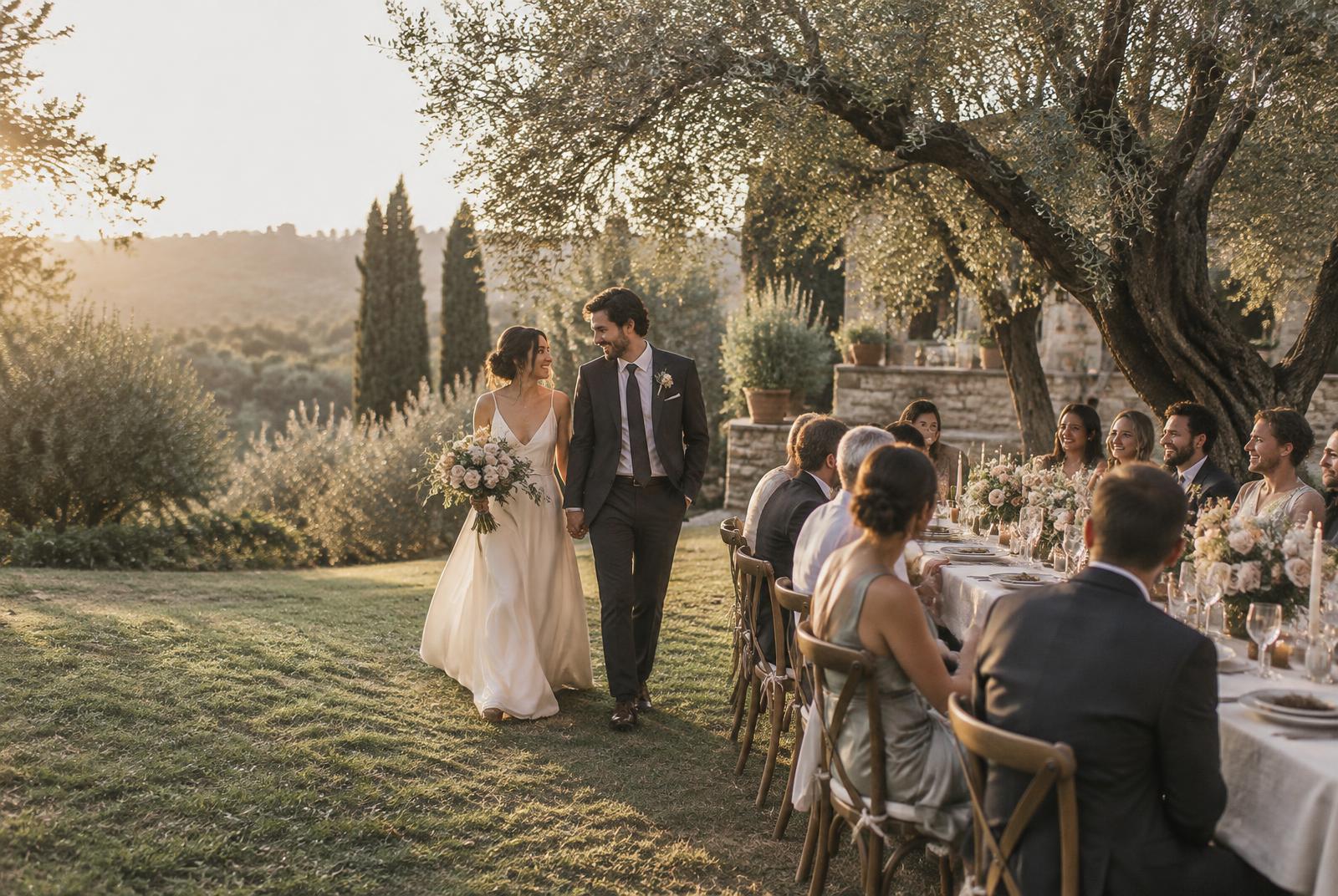
With fewer tables to decorate, a small wedding can afford to be more deliberate about centerpieces rather than more expensive. Choosing an approach—clustered vases, candle-only, foraged greenery—and applying it consistently tends to look more finished than mixing many small ideas together.
Pair your centerpieces with the rest of the tablescape using our 15 small wedding table decoration ideas, or explore more ways to save in 21 small wedding ideas on a budget.
Frequently asked questions
Are non-floral centerpieces actually cheaper?
They can be, since they often avoid florist labor and perishable stems, but costs vary by materials chosen. Ask for a quote either way before assuming.
Can I reuse ceremony flowers as centerpieces?
Often, yes—coordinate with your florist or a designated helper on the timing and logistics of moving them so it doesn't disrupt your schedule.
What's the easiest way to make a budget centerpiece look intentional?
Pick one consistent approach—one flower type, one vessel style, one color story—and repeat it across every table rather than mixing several inexpensive ideas together.