Backyard Weddings
How to Plan a Small Backyard Wedding
A practical guide to layout, rentals, weather, food, neighbors and the details that make a wedding at home work.
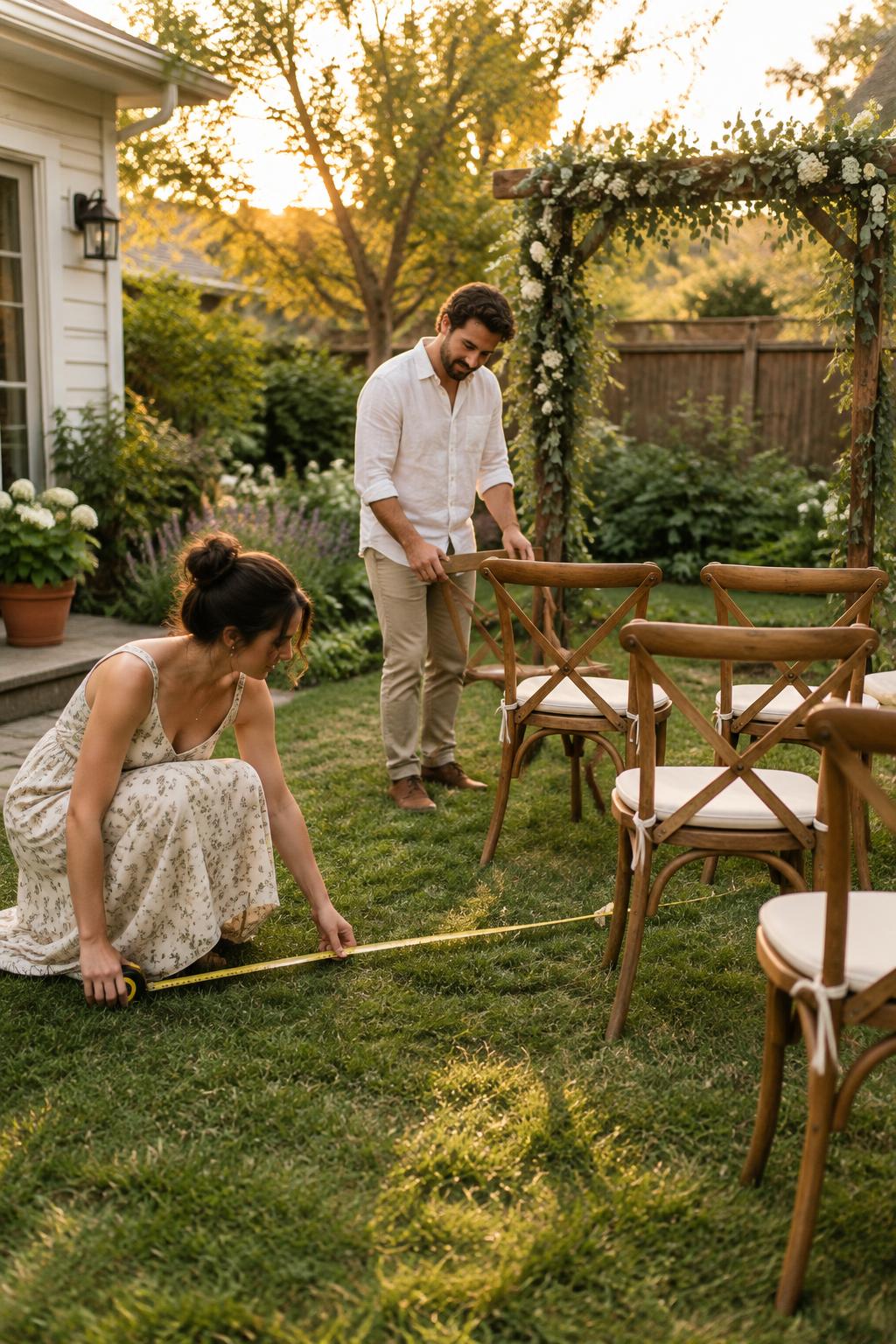
A backyard wedding trades a venue's built-in infrastructure for something harder to buy: a setting that already means something to you. That trade also means more of the planning falls on you—permits, rentals, weather, bathrooms and neighbors all become your responsibility rather than a coordinator's.
None of it is complicated on its own. It simply needs to be worked through in order, ideally starting months before the date.
1. Assess whether the space can work
Walk the yard at the time of day the ceremony and reception will happen. Note slope, shade, soil (a wet lawn can be a problem for heels and tent stakes), and how much space remains once you subtract garden beds, pools, sheds and other fixed features.
Estimate square footage per guest for seating, and remember to allow separate room for a dance floor, bar, gift table and walkways if you plan to include them.
Set up your rented chairs or a rough furniture layout in the yard weeks ahead of the wedding, even briefly. It reveals space problems that are difficult to picture from a sketch.
2. Check permits and local rules
Requirements vary widely by city, county and homeowners' association, so confirm directly rather than assuming. Common items worth checking include:
- Temporary event or gathering permits above a certain guest count
- Tent permits, especially for larger or staked structures
- Noise ordinances and cutoff times for music
- Street parking restrictions or need for a parking permit
- Open flame or fire pit restrictions
- HOA rules on temporary structures, signage or noise
If you're renting, confirm insurance requirements as well; some tent and rental companies require a liability policy naming the homeowner.
3. Plan the layout
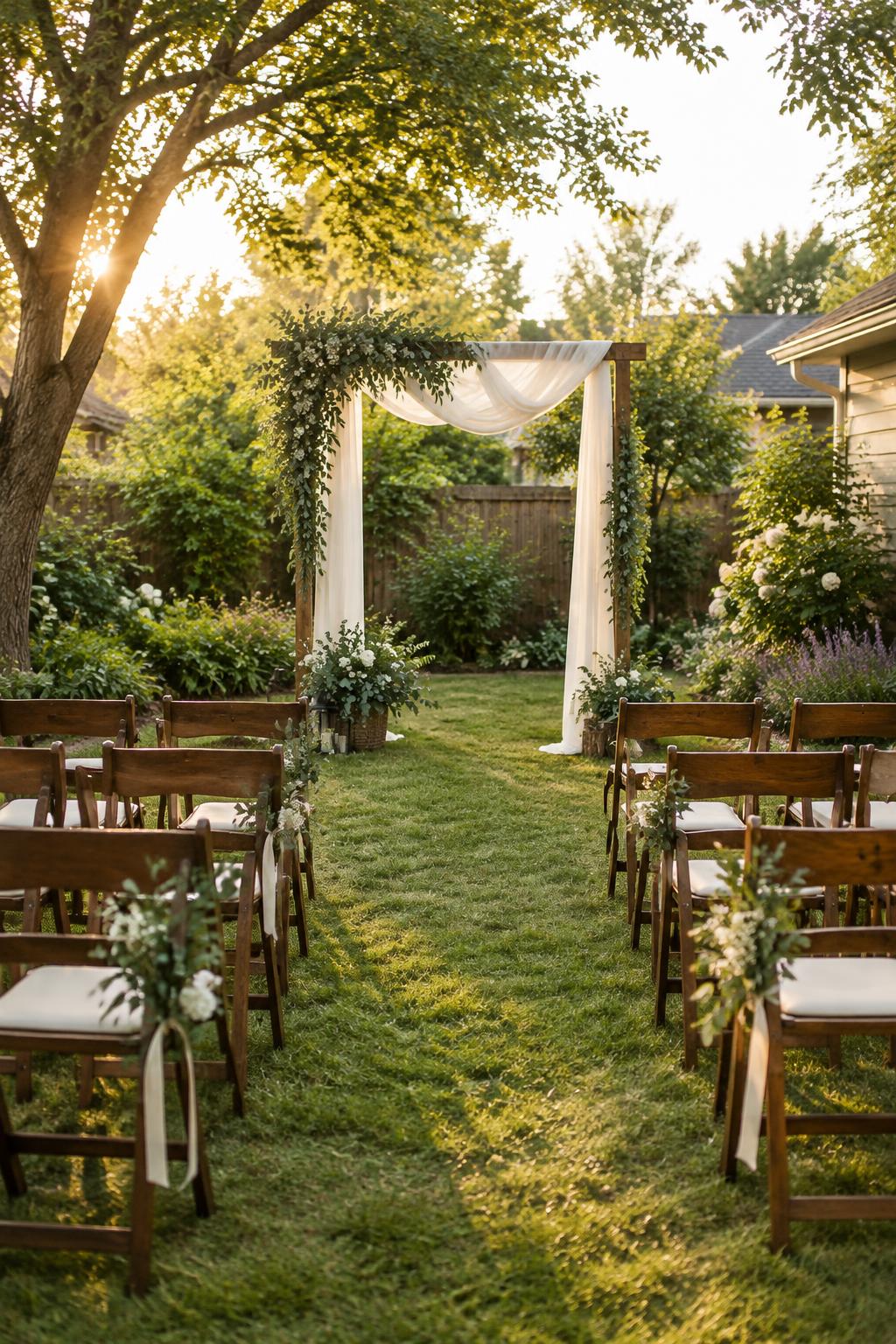
Sketch the ceremony area, reception seating, bar, food service and dance floor as a rough map before booking rentals. Decide early whether the ceremony and reception will share one space (requiring a "flip" during cocktail hour) or use two separate areas.
For more layout-specific ideas, see our small backyard wedding ideas.
4. Work out what you need to rent
A backyard rarely has enough seating, tableware, lighting or shelter built in. Typical rental categories include:
| Category | Consider |
|---|---|
| Tent | Sidewalls, flooring for uneven ground, lighting attachment |
| Seating | Ceremony chairs vs. reception chairs; can they double up? |
| Tables | Long tables vs. round; linens sized correctly |
| Lighting | String lights, uplighting, pathway lighting |
| Climate | Fans or heaters depending on season |
| Restrooms | Restroom trailer if home plumbing is insufficient |
Book tents and restroom trailers early in busy seasons; they are often reserved months in advance in areas with many outdoor events.
5. Sort out bathrooms, power and parking
A single household bathroom is rarely sufficient once a guest list grows past a small handful of people. Decide early whether you'll direct guests indoors, rent a restroom trailer, or limit the guest count to what your home can reasonably support.
Check how many outdoor outlets and circuits you have before booking a band, DJ or extensive lighting; a generator may be needed to avoid tripping breakers. For parking, consider whether the street can handle the guest count or whether offsite parking with a shuttle makes more sense.
6. Build a real weather plan
A rain plan should be a specific, workable alternative—not a vague hope that it stays clear. Decide in advance whether that means a tent with sidewalls, moving indoors, or postponing the outdoor portion by a set number of hours. Choose a firm time on the day before the wedding when you will check the forecast and commit to the decision.
Also plan for heat, cold or wind depending on the season: shade structures, fans, blankets or wind-safe centerpieces can matter as much as a rain contingency.
7. Decide how food will be handled
Confirm whether your chosen caterer will work an outdoor, residential setting, including whether they need generator power, prep space or direct kitchen access. If friends or family are cooking, be realistic about how much labor that adds to their day and whether it prevents them from attending as guests.
8. Talk to your neighbors
A short, friendly conversation—or a written notice—about the date, expected noise and end time can prevent a preventable conflict. Consider sharing your cutoff time for music and offering a way to reach you if something comes up.
9. Plan the day-of logistics
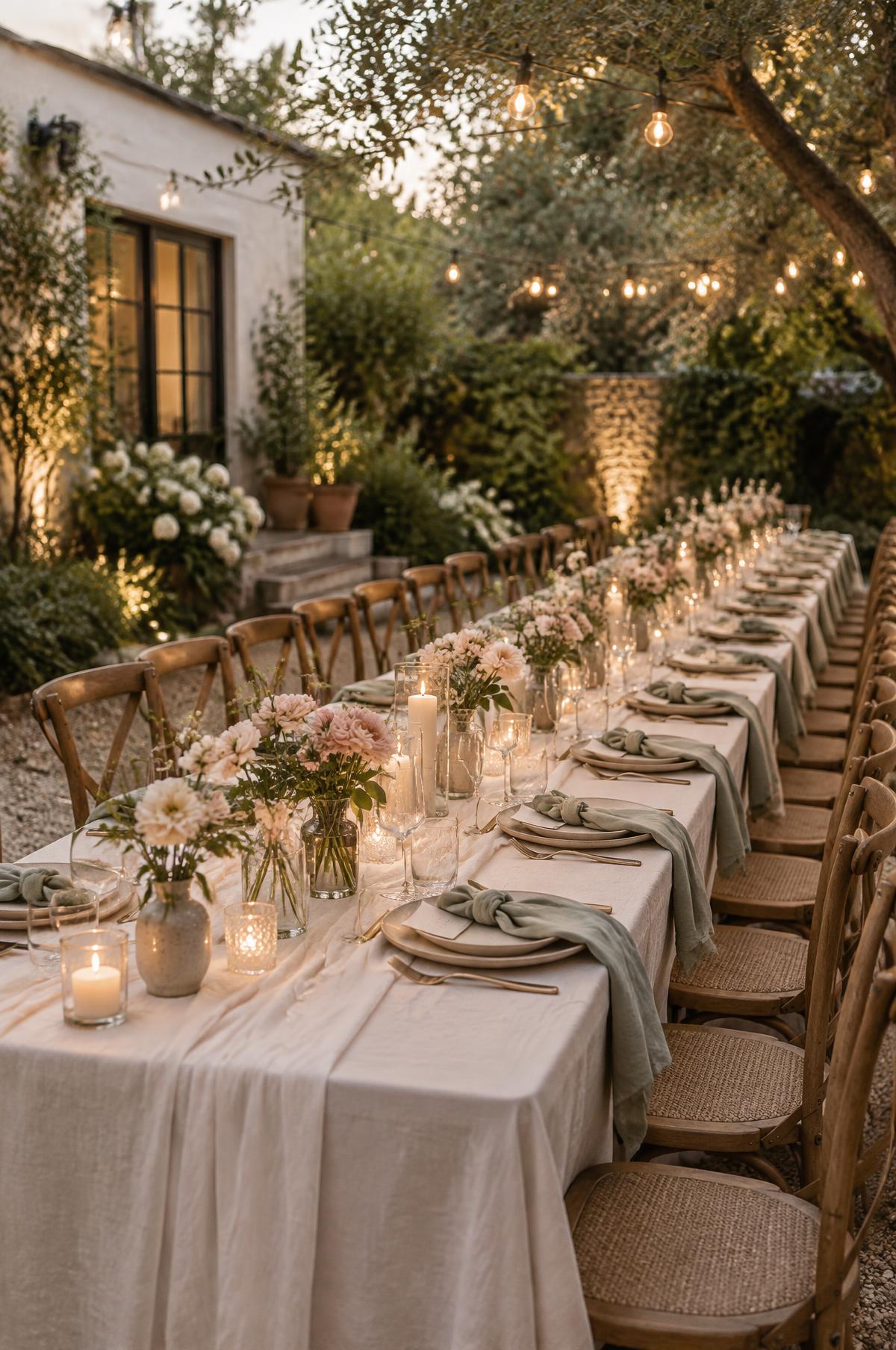
Assign a specific person—not yourselves—to manage vendor arrivals, rental drop-off and pickup, and any last-minute issues. Walk through the timeline for setup, the ceremony-to-reception flip if needed, and breakdown, including what time rentals must be ready for pickup the next day.
Save for later
Backyard wedding planning checklist
- □ Walk and measure the space
- □ Confirm permits and HOA rules
- □ Sketch a layout
- □ Book tent and rentals
- □ Arrange bathrooms, power and parking
- □ Confirm caterer can work on-site
- □ Build a specific weather plan
- □ Notify neighbors
- □ Assign a day-of logistics lead
Give yourself more time than you think you need
Most of what makes a backyard wedding stressful isn't the décor—it's discovering a permit requirement or a rental shortage a few weeks before the date. Working through permits, layout and infrastructure early leaves the final weeks for the parts you'll actually enjoy.
For the full checklist experience, see our small backyard wedding checklist, or browse 25 small backyard wedding ideas for inspiration once the logistics are settled.
Frequently asked questions
How far in advance should I start planning a backyard wedding?
Start checking permits and booking tents or restroom trailers as early as possible, especially in busy outdoor-event seasons when rental inventory can be limited.
Do I need a tent even if the forecast looks clear?
A tent also manages sun, wind and evening dew, so many couples rent one regardless of rain forecasts, particularly for meals and seating areas.
What's the most commonly overlooked detail?
Bathroom capacity and available electrical power are frequently underestimated in home settings that were never designed to host a large group.